
It’s Time for Venus to Rise
On Inanna, the astrological ages, and the goddess they split in two
If you’re familiar with the ancient Sumerian goddess Inanna (or her Akkadian/Babylonian counterpart Ishtar), you’ve probably heard about her descent into the underworld.
But there is a story that happens before the descent that many retellings skip past.
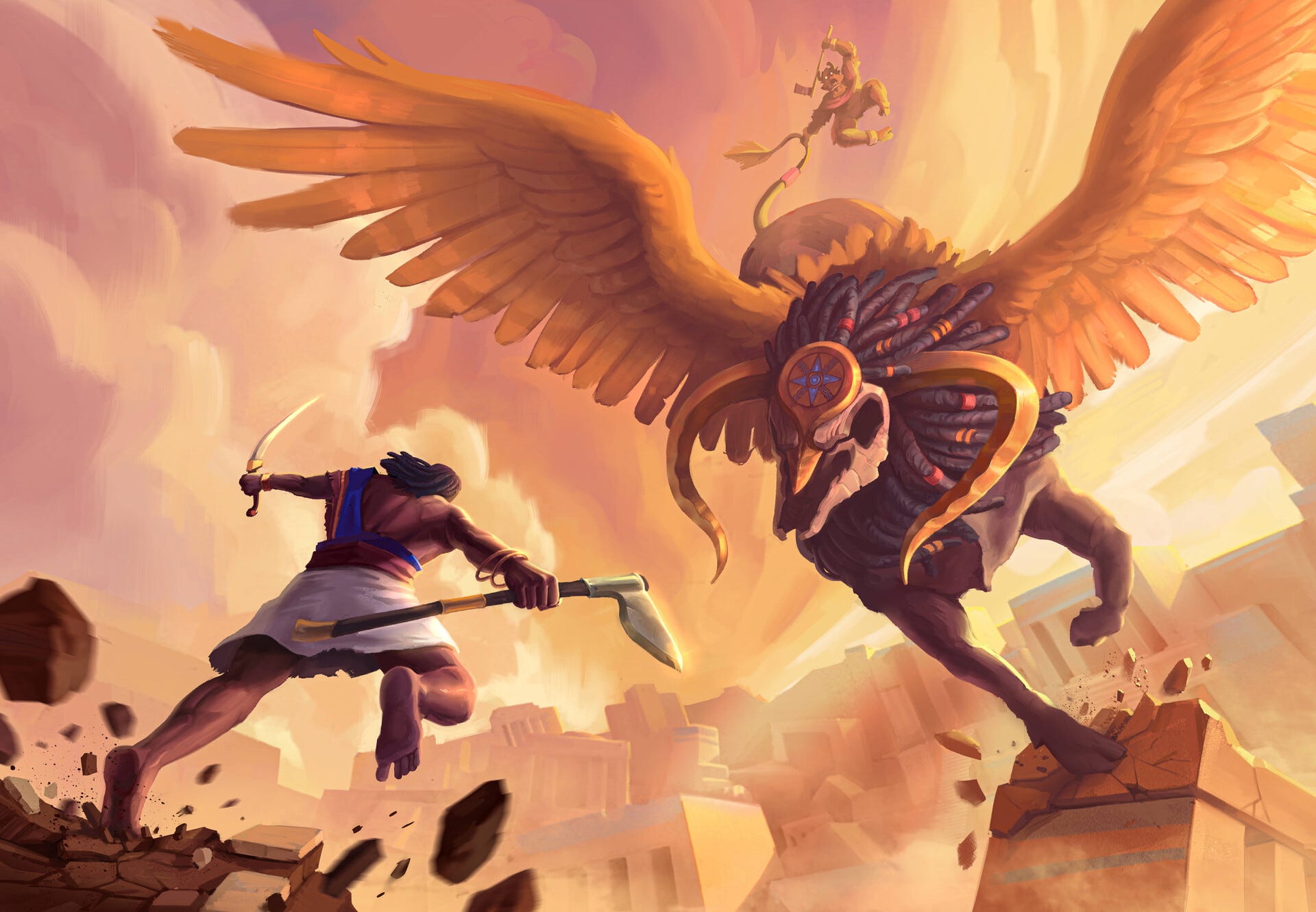
Gilgamesh’s Refusal of Innana and the Bull of Heaven
Inanna wanted Gilgamesh. He was the most celebrated warrior king in the world, the one the gods had blessed beyond all others, and she went to him and offered herself. She was the goddess of love, and she offered love to him.
Gilgamesh went heard Inanna’s longings, and he was offered several favors by the powerful and influential queen of heaven. As he traveled he communed with his mother, Ninsun, and told the goddess about Inanna’s proposal.
“Do not let her gifts enter the house,” Ninsun advised. “Her tender touch would weaken your warrior’s arm.” Ninsun knew that the goddess of war would not help her son’s warrior nature if she was sleeping with him.
So he refused Inanna, but not gently. He scorned her in the most public and savage way available to him. He listed her previous lovers one by one, named what had become of each of them, and used her entire erotic history as evidence of her unworthiness. He called her a broken door. A fire that goes out. A shoe that pinches. He took the thing that made her Inanna - her desire, her erotic power, her capacity to love fully and move on - and he turned it into a weapon against her.
What could I offer
the queen of love in return, who lacks nothing at all?
Balm for the body? The food and drink of the gods?
I have nothing to give to her who lacks nothing at all.
You are the door through which the cold gets in.
You are the fire that goes out. You are the pitch
that sticks to the hands of the one who carries the bucket.
You are the house that falls down. You are the shoe
that pinches the foot of the wearer. The ill-made wall
that buckles when time has gone by. The leaky
water skin soaking the water skin carrier.
—Tablet VI, the Epic of Gilgamesh
As the Age of Taurus began to give way to the Age of Aries, he slut shamed the goddess of love in front of his court. And the world of the epic treated it as wit.
She wanted love from the most powerful man alive and got her own nature thrown back at her as an insult. When I reread this story, I’m filled with modern-day rage. That is what the system still does to women who want things openly. It takes the wanting itself and makes it the proof of their damage.
Of course she raged. She went to her father Anu and demanded the Bull of Heaven, threatened to break down the gates of the underworld if he refused, and sent Gugalanna - the great Bull of Heaven, her sister’s husband, the sacred force of the Taurean age that she resided over - down to Uruk. The great bull, earth god also known as the “Canal inspector of An, the sky god” threatened the city with drought and famine, sucking fertile water out of it’s canals- but Gilgamesh and his companion Enkidu killed the bull. Enkidu threw the bull’s hindquarter in Inanna’s face. She went up on the walls of Uruk and screamed her grief and her fury into the sky.
And then Gugalanna, the Taurean Bull of Heaven, was dead. And her sister Ereshkigal, down in the underworld, had lost her husband. The age of Taurus was over. The wound the system inflicted on Inanna became the wound that ended an entire astrological age.
This is what the patriarchy does with devastating efficiency. It shames a goddess for her erotic wholeness, watches her reach for power to compensate, and then calls the consequences her fault. Inanna played a part in what happened, of course. She was high on her own power. But the system handed her a role that had to be played and didn’t follow through when the rubber met the road.
The descent is where she stops playing by the sky-god’s rules.
Here is what makes all of this so much more than a myth about a descent. Inanna is Venus. She is the planet Venus before the Greeks called her Aphrodite. She is not just named after the planet; her mythos, particularly her descent into the underworld, represents the astronomical cycle of Venus.
The Sumerians tracked that bright wandering star with extraordinary precision and mapped her entire cycle onto the goddess. They tracked her appearances as the morning star and the evening star, and the dark periods in between when she vanishes from the sky altogether. The story of her descent is that disappearance. The three days Inanna spends on the hook, in her naked truth in the underworld, are the three days Venus goes invisible at inferior conjunction, passing between the earth and the sun, dying before she rises again on the other side.
Inanna is not the soft and harmonicVenus we inherited from later cultures. She is the goddess of love AND war, of desire AND sovereignty, of the erotic AND the political. Armies prayed to her before battle. Lovers prayed to her in the night. She outsmarted the great trickster god Enki and took the divine powers for herself. Her desire was enormous and her capacity for love was enormous and her rage when that love was weaponized against her was enormous. The Sumerians held all of that as one thing, one goddess, one planet moving through the whole sky. The split came later, and the circle came first.
Inanna was worshipped and empowered during the Age of Taurus - and Taurus is Venus’s own sign. Her home. The age that was ending with the death of the Bull of Heaven belonged to her. It was made of her energy, and it carried her signature, which is fertile, sensual, embodied, and of the earth. The wound the new patriarchial system gave her by rejecting her and killing the Bull of Heaven ended her age- and she knew that she couldn’t continue to live in the Heavens alone anymore.
She had to go underground.
What She Takes Off at the Gates
The poem begins famously with the lines:
From the Great Above she opened her ear to the Great Below
From the Great Above the goddess opened her ear to the Great Below
From the Great Above Inanna opened her ear to the Great Below
-Wolkstein and Kramer
Inanna doesn’t go down to the underworld empty-handed. At the peak of her glorious reign as Queen Goddess of Love, she goes dressed in everything she has. A crown of authority, lapis lazuli necklaces, a golden breastplate, the shiny ring, a measuring rod, a royal robe. She has seven adornments, representing her heavenly power, and she crosses through seven gates. At each gate she is required to remove one layer.
These adornments are the me, the divine powers. They came to her through Enki, the grandfather god, who gave them to her and later regretted it. They were formalized through her marriage to Dumuzi, the shepherd king, the ram god, one who symbolized the Age of Aries rising. In her descent, Innana is dressed in the gifts of a system that gave her power on its own terms and expected her to stay inside those terms. And she is dressed in the armor she built when the system shamed her for wanting something the system couldn’t hold.
She takes it all off. Gate by gate, piece by piece - the power she was given and the power she grabbed to compensate for what was taken. She is also, in the sky, releasing her own era. The evening star going dark. Venus disappearing into the underworld of the solar glare, shedding her visibility and her brightness and her queenship in the night sky.
This journey was far from the Persephone-Hades telling of the goddess being stolen to the depths by the dark lord. Instead, it is a laying down of ego, of pride, of heavenly pursuits. Inanna cannot get to her sister carrying all of the baggage. She cannot meet what is true wearing the costume of the woman the system made.
By the time she reaches the bottom she is fully naked and bowed low. And then she dies. And then she is hung on a hook.
The Sister Who Was Sent Away
Ereshkigal is the queen of the underworld, and in my read, she is the part of the great goddess that got sent underground when the above-world order got organized and administered. At some point in the deep past, the story says, she was abducted to the underworld and made to rule there. The surface world carried on without her.
Though depicted as a monster, she is not a villain. She is the exiled half of the whole goddess. She is everything that doesn’t fit the arrangement, everything too dark or too wild or too grieving to be the consort of the shepherd king. She has been down there a long time. And Inanna, for all her power, has never gone to visit her.
Now Ereshkigal’s husband is dead, and Inanna is responsible for his death. Inanna called the Great Bull from the sky out of pride, and he was killed. It is this that calls her down under. Perhaps the system shamed her into a corner she couldn’t get out of any other way, but either way, the Great Bull is gone. And Ereshkigal is in labor with grief, alone in the dark with the body of the bull of heaven, and Inanna finally goes.
She is going to her shadow, the invisible part of herself she exiled by becoming fully identified with the queen above, the acceptable face of the goddess, the one who fit the arrangement. And she is going carrying the full weight of what happened, even if the myth doesn’t name it directly. The reunion at the center of the descent wasn’t the real death. The death was Ereshkigal knowing that Inanna still wore the trappings, the costumes, of that world that would no longer accept the erotic and the deep. That face of death was the last thing that had to go. And it took three days.
The Ones Who Could Reach Her
Knowing that most beings who go to the underworld never return from the darkness, Inanna strategized about her re-ascencion with her close advisor, the warrior heroine Ninshubar. Ninshubar came with word of Inanna’s trapping down below, and when the gods above refuse to help her, Enki sends two beings to the underworld to bring Inanna back. They are called Kalaturru and Kurgarra in some translations. They are created specifically for this mission, made from the dirt under Enki’s fingernail, and they are neither male nor female.
This is not incidental. Every other being in the myth is locked into a role within the gendered order. The gods won’t go down. The husbands won’t go down. The servants are helpless. The only ones who can reach Ereshkigal, Queen of the Underworld, are the ones who exist outside the system entirely. They go to her in her mourning and her labors of pain for her dead husband, and they simply witness it. They mirror her moaning back to her. They offer no rescue, no advice, and no fixing. They just meet her in the dark. And she is so moved by that that she releases Inanna.
The first author in history wrote: the ones outside the system are the ones who can move freely through it.
The Husband Who Didn’t Mourn
When Inanna comes back up she finds the shepherd king Dumuzi sitting on the throne in her good clothes, not mourning her at all.
She was only down there three days, and he was already wearing the crown.
In the sky, this is Venus rising as the morning star. She has crossed through the dark and come out on the other side, visible again, but in a different part of the sky, preceding the sun instead of following it. She is changed, no longer the evening star who lit the dusk of the Taurian age. She is the morning star rising into something new, and she comes up to find the ram king enthroned.
The myth is quiet about this but it is not subtle. The shepherd king was ready, he had been waiting for the moment. The descent was, among other things, an opportunity, and he took it.
So Inanna sends him down in her place, a promise she must keep to her sister. He becomes the one who goes to the underworld- the sacrificial lamb, the dying and rising shepherd king who will later echo through so many other myths and religions. She sends him down because he is the one who should have mourned and didn’t.
But it doesn’t entirely hold. His sister Geshtinanna, enmeshed in his power, loves him so completely that she offers to take half his time in the underworld. And the myth allows it. Dumuzi gets six months above ground, in the green season, on the throne. Geshtinanna takes six months in the dark.
She does the harder work. She goes willingly into the place her brother could not bear. She is the true sacrificial lamb, offered up to maintain the ram’s power. The age of Aries rises and another woman holds the underworld so it can.
The Men Who Made the Slaying Sacred
On the other side of the ancient world, another mystery religion was also holding the death of the bull at its center.
Mithras was a Roman mystery cult, practiced in underground temples by soldiers and merchants, and its central image was the tauroctony: Mithras kneeling over a great bull, driving a knife into its neck, his face turned away as if he cannot bear to watch. Scholars like David Ulansey have argued that this image is astronomical. The bull is Taurus. Mithras is the force that ends the age. The slaying is the transition from one great era to the next.
It’s the same astronomical event. Notice the planetary layer underneath it. Inanna is Venus. Her astrological age, the age of Taurus, is Venus’s sign. Mithras comes out of the world of Mars, the soldier’s god, and Aries the ram, the warrior, the next age, is Mars’s sign.
The transition from Taurus to Aries was a transition from Venus to Mars. And part of what that transition required was making Venus manageable. The whole Inanna, the one who loved and waged war and descended and returned and held all of it in one body, had to be divided up. Aphrodite gets the bedroom. Athena gets the battlefield. Artemis gets the wild. The Inanna who was all of those things at once becomes a committee of acceptable femininity, each piece containable on its own, none of them the whole.
The Mithraic cult is, among other things, the mystery religion of that transition celebrating itself.
Where Inanna’s tradition mourned the bull, descended into grief, went to her sister in the dark, and came back changed, the Mithraic tradition made the killing the sacred act. The death of the old age became a triumph. A warrior mystery.
Mithras slays and stands over what he has slain, and his cult spread through every Roman garrison in the known world.
These are two stories about meeting the end of an actual, astronomical age. One goes downward and inward, and one drives the knife, killing the bull and fragmenting the goddess so she can never quite find her way back to herself.
It’s Time for Venus to Rise
We are now at another time of great cycles turning.
The names for what precisely is ending and what is beginning are debated and probably beside the point. What is not debatable is the feeling, the felt sense that something enormous is shifting. Old structures are cracking, and the roles that everyone was assigned are being questioned in ways that feel both necessary and terrifying. That the above-world order is showing its seams once again.
And the same split is visible now that was visible then. There is a Mithraic energy moving through the world right now, with the impulse to conquer the transition and to other the enemy. An impulse to make the slaying of the old age a glorious act, to take the throne while the goddess is underground. We are no longer in the Age of Aries, but with Neptune and Saturn in that sign we are feeling the Mars energy. The arrow energy, the straight line energy that knows where it is going and will cut through whatever stands between here and there.
And there is Inanna’s way, which asks something harder. Inanna asks us to go down into what is being lost as we move through the cycles, to strip off the adornments of the arrangements that are showing their dark shadows- even the ones that felt like power, comfort, or glory. It’s time to find the exiled sister, the exlied parts of ourselves that we hid underground, and be there with them in their grief. It’s time to be moved by the ones who exist outside the system, to whom none of this ‘end of the world’ narrative is anything new. It’s time to come back up through all seven gates carrying what you really know because you really took the time to go down into the depths.
The Venus that is rising now is not the soft one we think we know. She is the whole one. Love AND war. Descent AND return. The morning star AND the evening star. She is the circle, the glyph with the world held inside the round, not the arrow shooting out into conquest. She holds the cycle, the whole wheel, the return built into every departure.
That is what integration looks like: the fragmented goddess finding her way back to herself. The parts that were divided up and made manageable to the powers that be slowly recollecting into one.
She is coming back. The compass doesn’t point away from the dark.
An Invitation to Tune Your Own Compass
I built a course around this myth and how we can work with her to release the adornments of ego and find our true orientation, our internal compass.
It’s called Heart is a Compass, and it maps the eight gates of the Heart/G Center in Human Design to the eight holy days of the Wheel of the Year, with Inanna’s descent woven through as the living myth underneath it all.
We meet live for five Tuesdays beginning May 19, and so I’m excited to be bringing it to you.
If this post tugged at something in you, you can find out more about the course and register here. <3
Find me on Instagram!


