


Hey friends,
This episode has been a long time coming. It’s the one where I finally lay out the whole architecture… all the systems I work with on Living the Spiral, how they’re related, and most importantly, why I think they matter more than ever right now.
If you’ve been in my world for a while and nodded along when I mention the Fuxi sequence or the 64 gates of Human Design without quite seeing how it all fits together, this episode is for you. And if you’re brand new here, welcome! This is a good place to begin.
The through line is this: all of these systems are, at their root, technologies for locating yourself inside a living pattern. They remind us that we’re not separate from what’s moving around us, that the seasons are not happening to us. I found that when that relationship between my body and the season and ancestral time actually landed in my lived experiences rather than just my mind, something deep shifted. My sense of belonging came alive. And at the heart of it, that’s what this whole project is about.
🎧 Listen to the episode in the player above, on Youtube, or anywhere you find podcasts 🎧
Episode Overview:
The Oldest Question
We start at the beginning, with the impulse that every human culture across recorded history has shared - which is the need to locate themselves inside a larger story. Every culture across spacetime has created systems to address “Where am I in the cycle? What is my relationship with the land telling me? What do the shifting stars and planets say about the quality of this moment??
This impulse long predates writing. What I find remarkable is that across wildly different cultures with no contact between them, people arrived at remarkably similar answers: the sky is a clock, the seasons carry teachings, patterns repeat, and inside the repetition there is meaning. That’s the deep root of every system we cover in this episode.
The I Ching: The Origin Story
We go into the history and mythology of the I’Ching, starting with Fuxi, the mythological sage-emperor who received the eight trigrams (the ba gua) by observing nature. He witnessed the marks on the back of a tortoise shell, reflecting the behavior of water, the shape of wood, and the way things grow and die and grow again. Fuxi saw that reality is made of two forces in relationship, yin and yang, and that stacked in threes they produce eight fundamental qualities of energy: thunder, water, mountain, earth, wind, fire, lake, and heaven.
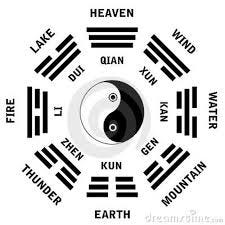
From there we get to King Wen, who (while imprisoned around 1000 BCE) took Fuxi’s eight trigrams and stacked them into pairs to create the 64 hexagrams - six lines, each broken or unbroken, 64 possible combinations. His son the Duke of Zhou wrote the commentaries for each of the individual lines, and Confucius added his own layers later. The I’Ching we have today is a palimpsest- thousands of years of wisdom in conversation with itself, all built on those same 64 patterns.
I also talk about why I have some frustration with how Human Design sometimes presents itself as if it arrived from nowhere, when so much of it comes directly from these ancient systems that deserve their own reverence and credit.
The Fuxi sequence and binary code
This is the section I’ve been wanting to talk about for a long time, and it genuinely blew my mind when I first found it.
The sequence that Human Design uses on the mandala -the Fuxi sequence, also called the Earlier Heaven sequence - is a mathematically precise ordering of the 64 hexagrams that was actually formalized not by Fuxi himself but by an 11th century Song dynasty philosopher named Shao Yong around 1060 CE. Shao Yong arranged the hexagrams starting from all broken lines and moving systematically toward all solid lines, with each hexagram differing from the next by the minimum possible change.
The result is a perfect binary sequence. If you assign yin the value zero and yang the value one and read the lines from the bottom up, the Fuxi sequence counts in binary from 0 to 63 without missing a single step. Shao Yong drew this as a square diagram, with eight hexagrams across, and eight down, where the top line alternates yin and yang every hexagram, the next line every two, then every four, every eight, every sixteen, every thirty-two. This is exactly how binary counting works.
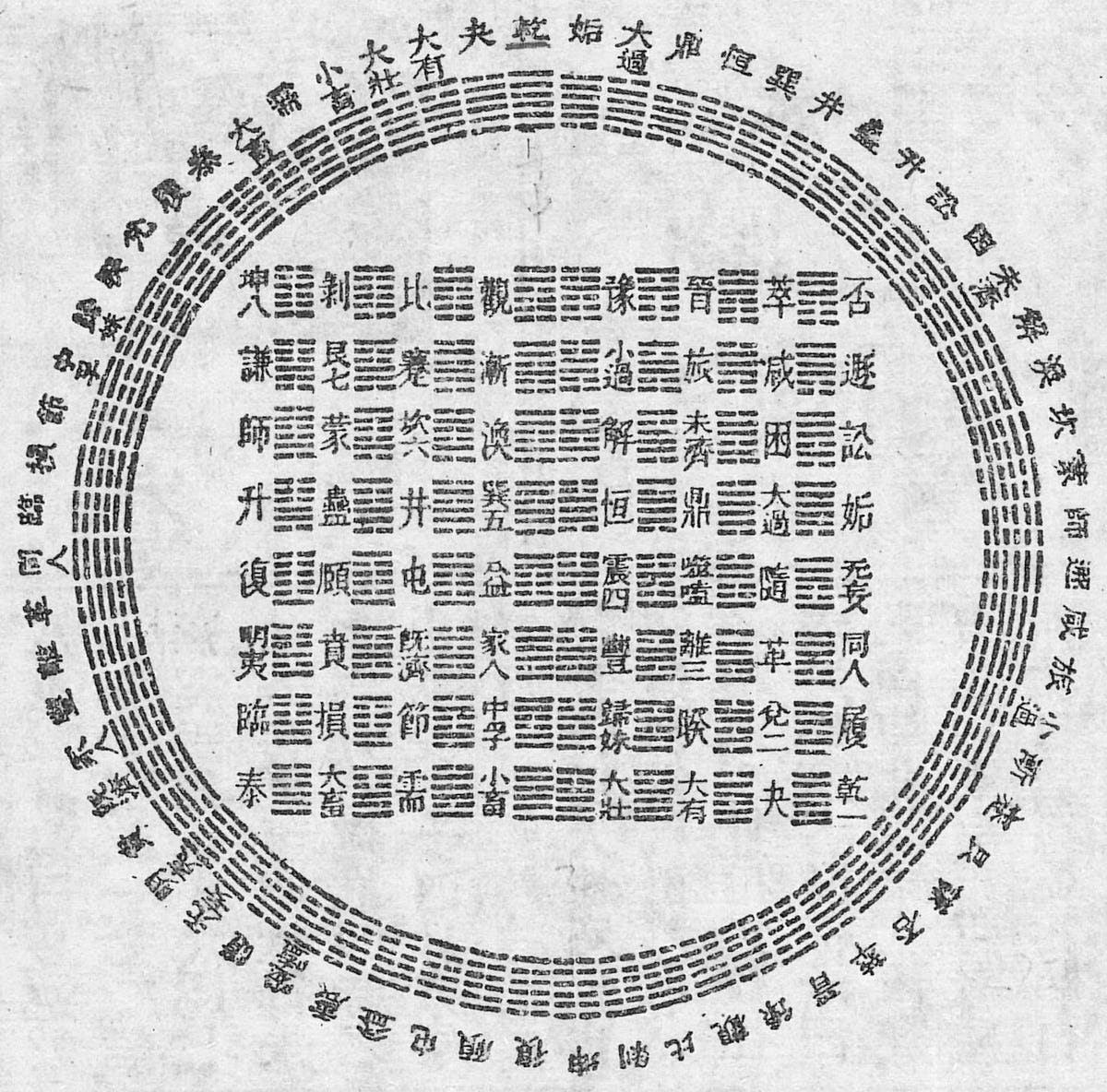
Six centuries later, the German mathematician Gottfried Wilhelm Leibniz, who had been independently developing binary arithmetic since 1666, received a woodcut of this diagram from a Jesuit missionary named Joachim Bouvet who was living in Beijing at the Forbidden City. Within a week of seeing it, Leibniz sent his paper on binary arithmetic to the Paris Academy for publication, titling it with direct reference to the ancient Chinese figures of Fuxi. He wrote that the hexagrams corresponded perfectly to binary numbers and that the ancient Chinese were far more mathematically sophisticated than anyone in Europe had assumed.
There’s a wrinkle worth knowing: the Chinese never actually interpreted the hexagrams mathematically. That structure was always latent in the form, but Leibniz was the first to read it that way. And he was working from Shao Yong’s later rearrangement, not Fuxi’s original work, something Bouvet also didn’t mention. But what Leibniz saw was real, and profound. The binary system he developed with it eventually became the foundation of Boolean logic, then electrical circuits, then the transistor, then the chip, then everything you’re using to hear or read this.
📌 [Add image: Fuxi/Nüwa serpent image — Han dynasty silk painting] 📌 [Add image: Shao Yong’s Fuxi square diagram — the 8x8 binary grid]
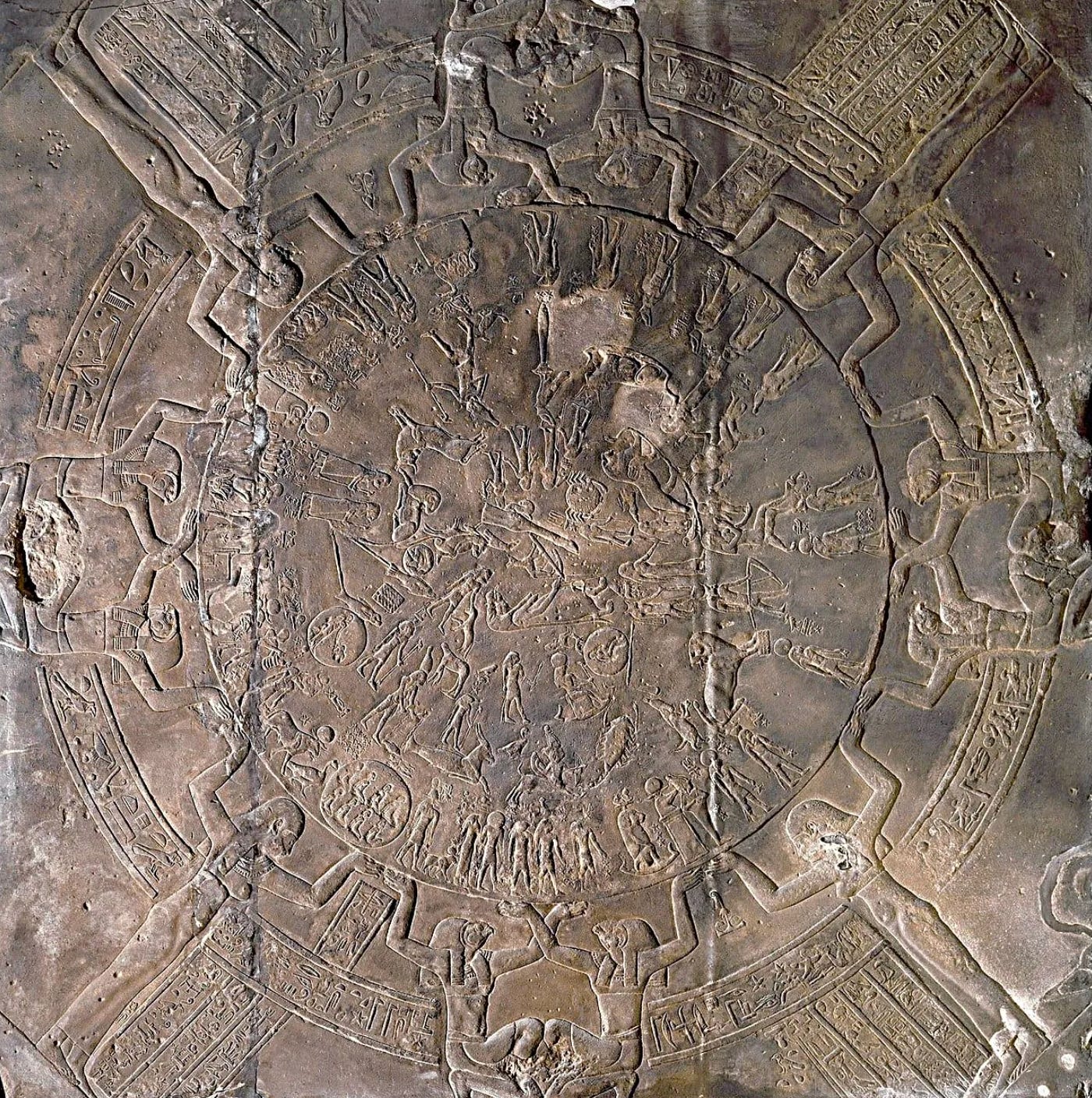
The Zodiac: The Origin Story
The roots of Western astrology are Babylonian, going back to ancient Mesopotamia around 2000 BCE or earlier. The Babylonians were extraordinary astronomers who tracked planetary movements from clay tablets across generations and noticed that the sky was a clock, that the positions of the sun, moon, and planets marked the seasons, the floods, and the harvests. The 12-sign zodiac solidified around the 5th century BCE in Babylon when they divided the ecliptic into 12 equal sections named for nearby constellations, tracking the quality of light through the seasons.
When Alexander the Great conquered Persia and Egypt in the 4th century BCE, Babylonian astrology collided with Egyptian astronomy and then with Greek philosophy. The Stoics and Platonists gave astrology its philosophical backbone, the idea that the cosmos is a living, intelligent whole and that the movement of celestial bodies reflects and participates in events on Earth. The hermetic tradition’s “as above, so below, as within so without” comes from this period.
I also touch on the precession of the equinoxes here (the reason the tropical zodiac signs no longer align with their original constellations) and why that doesn’t undermine tropical astrology, which was always a season-based system rooted in our relationship with the Earth rather than the stars themselves.
What moves me most is that these two traditions, the I’Ching in China and the zodiac in the ancient Near East, were developing at roughly the same time, with no contact. And they were doing similar things: reading the patterns of energy as it moves through time across the scope of a year, a lifetime, and beyond. People across the globe finding meaning in the turning, and locating themselves inside something larger.
The European Wheel of the Year
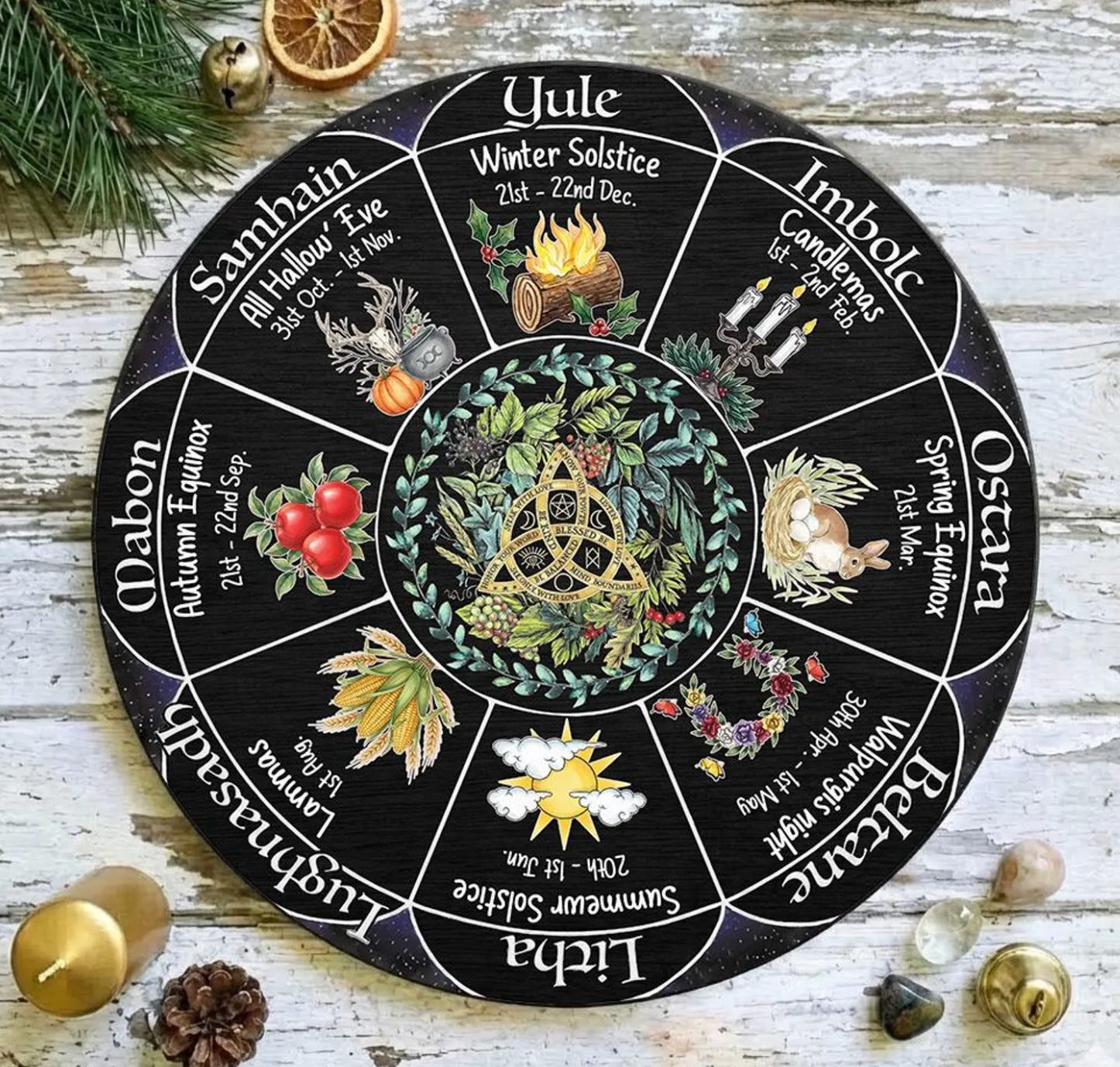
The eight holy days of the wheel of the year (the solstices, equinoxes, and four cross-quarter days between them) are the third tradition I work with. The modern Pagan Wheel of the Year was codified in the 1950s by neo-pagans and neo-Wiccans, but it draws from much older Celtic and various European pagan traditions, some of which may predate even the I’Ching and the zodiac.
These were the fire festivals and seasonal celebrations of agrarian communities in northern Europe. They were ceremonies about the return of the sun, about when to plant and when to harvest, when to go inward and when to put yourself out in the world. They are fundamentally human ceremonies rooted in the body and the land.
The beautiful thing is that the Wheel of the Year and the zodiac confirm each other perfectly. The four cross-quarter days all fall in the fixed signs: Samhain in Scorpio, Imbolc in Aquarius, Beltane in Taurus, Lughnasadh in Leo. The solstices and equinoxes happen at the cusps between the mutable and cardinal signs. The zodiac is already a wheel of the year, based on these astronomical observations. These traditions aren’t competing by any means, they’re translating the same pattern into different languages.
How Human Design and the Gene Keys plug in
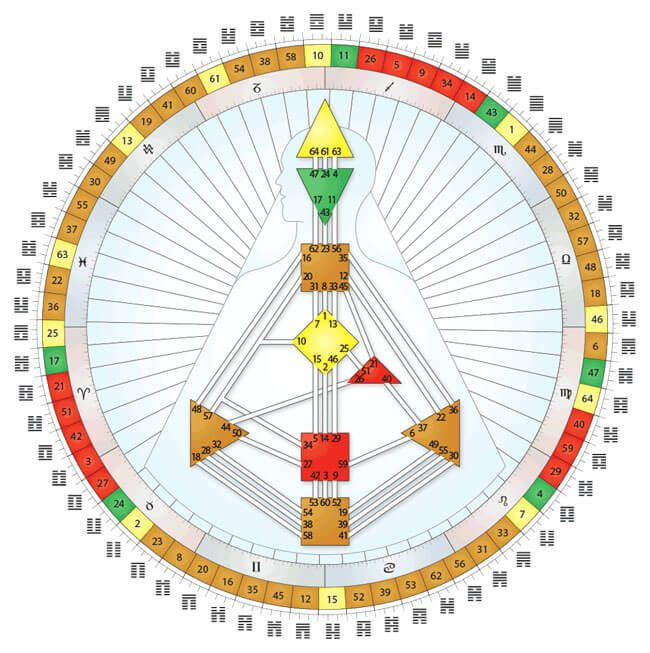
In the late 1980s a man named Ra Uru Hu received what he described as a mystical transmission and developed Human Design, a synthesis that took the 64 hexagrams of the I Ching and mapped them directly onto the zodiac wheel, as well as onto the chakra centers of the body. The mandala arranges all 64 gates in the Fuxi sequence around the full 360 degrees of the Zodiac.
The Sun transits all 64 gates through the course of a year, spending about five to six days in each one. Your Human Design birth chart is a snapshot of where the Sun, Moon, and every planet were in those gates at the moment you were born, plus a second chart from 88 days before your birth (the end of the second trimester, when all organs are formed). Those two snapshots of the planets superimposed onto eachother create your bodygraph, with defined centers showing where you have consistent reliable energy and open centers showing where you’re most responsive to the environment.
The Gene Keys, developed by Richard Rudd who was a student of Ra’s, takes the same 64 hexagrams into a more contemplative and poetic territory. Where Human Design describes the mechanical structure, the Gene Keys asks you to move through each gate at three levels: the Shadow (the contracted, fear-based expression), the Gift (what emerges when you work with the shadow rather than against it), and the Siddhi (the fully flowering, transcendent potential of that frequency). I love the poetry of it, and feel that it’s a beautiful complement to the more structural and mechanical language of Human Design.
And the Wheel of the Year loops back in here beautifully, too: the eight Pagan holy days on the wheel of the year correspond exactly to the eight gates of the G Center, the center of identity and direction at the heart of the bodygraph. At every solstice, equinox, and cross-quarter day, the Sun is transiting a G Center gate. The wheel of the year is written into the mandala, and the land, body, and sky are in conversation through these 64 gates across time.
Why Cyclical Living Fosters Belonging
I spent the past few years tracking the sun’s progression through the Zodiac and also through the Gates of the Mandala. And when you know the Sun is in a particular gate and you’re feeling that energy in your life, it is truly profound. The collective nature of this ancient archetypical symbolism means you’re not broken or behind, but you can tell that you’re inside a specific quality of collective energy. The more I attune to this, the deeper sense of belonging I feel. It’s the feeling of being inside a larger pattern that includes me.
And when you know your own gates that are activated in your chart, you start to understand why certain seasons feel like coming home and others feel like unknown territory. It can give you empathy and compassion for why certain people light you up and others grind your gears. It’s attunement to a larger resonance field, because the Sun is transiting the same gate for every person on Earth at the same time, but lighting their charts up in very different waays. That shared invisible weather, and these systems that are making it visible to many, has made me feel more belonging, and more compassion, for myself and everyone around me.
A Counter-Eschatology
At the end of the episode I spend some time with an essay by JM at Starnightdwell that I’ve been thinkin about a lot since I read it. The essay is about eschatology (the study of endings, of last things), and how we are currently living inside a cultural and political moment that is being actively shaped by people who believe in a very specific kind of end times. A time when Armageddon isn’t a metaphor but an actual policy goal.
In their essay, JM points out that astrology is by its nature based on cyclical models of time. And an understanding of the cyclical nature of time makes for a very different kind of eschatology. When endings are also beginnings, you can’t have an end time in the way that many people pulling from the prophecy of the Abrahamic religions are leaning into right now. They argue that the attunement to cyclical time changes the ethical weight of everything- if you believe the land comes back and the story continues in a cycle, you make different choices than if it were all to end. You have to live differently.
In the episode, I also talk about JM’s critique that astrology as it’s currently practiced has largely been captured by an individualized, late-stage capitalist frame -all about my chart, my type, my shadow work- and how that can become another way of feeding the ego while the world contracts around us. The antidote lies in remembering that these were always collective technologies, from the start. The zodiac originated with stories about how the quality of the season shows up for everyone. The I’Ching was always a map of how energy moves through universal situations, not just through individuals. The Wheel of the Year was always communal, celebrating pivotal moments in the year when whole villages moved through the thresholds together.
When we track the Sun through the gates, mark the cross-quarters, and do this work in community, we are practicing a counter-eschatology, a reclaiming of the world away from the doomers and end-timers. We are rehearsing a different relationship to endings, living inside the spiral instead of waiting for it to end.
Tools and Resources I Mention in the Episode
For the I Ching: I use an app simply called Yijing — it has five different translations you can switch between including Nigel Richmond’s Language of the Lines, Brian Arnold’s modern English interpretation, Carol K. Anthony’s Oracle of the Cosmic Way, and Gregory Richter’s transcription from Chinese. You can cast coins or shake your phone to cast, or just read straight through.
For Human Design: My favorite structural resource is the Neutrino app. It’s really easy to use and has a wealth of information about your chart, your centers, your gates, and all the substructures of the system.
For the Gene Keys: The Gene Keys book by Richard Rudd is the source. There’s also an audiobook read by a very serious and eloquent British woman that I enjoy. You can also sign up on the Gene Keys website to receive a limited-time audio transmission (called “The Pulse”) from Richard Rudd each time the Sun transits into a new gate.
The Living the Spiral HD Astrology Calendar: A Google, Apple, or Outlook compatible calendar that tracks all the solar gate transits and major astrological events through the year. Available to paid subscribers of this substack at livingthespiral.com, or you can buy one at hearthandspiral.com.
Come Walk the Mandala with Me!
The Mandala 64 Walk is my ongoing series here on Substack, where I’m writing one post per gate as the Sun transits through the year. Each post will include the I’Ching hexagram, the Gene Key shadow/gift/siddhi, a somatic practice, and a creativity prompt to align with the energies of the week. Free to follow along!
Paid subscribers to Living the Spiral will get tickets to my live rituals that I’m hosting at each of the eight G Center gates/Holy Days, plus a digital calendar of Astro-HD transits.
We started with Gate 25 at the Spring Equinox and we’re moving through Aries season now. Come join at livingthespiral.com.
If you want to go deeper into your own design and explore how your chart is activated inside these larger cycles, my books are open for readings at hearthandspiral.com! I offer astrology, human design, and combination readings for both your natal charts and transits of the current moment.
The next episode will be about the astrology and human design activations of the Full Moon in Libra, happening this week on April 1st-2nd (depending on time zone). See you there!
With spiralic love,
Alison


